
Offshore development exposes five core risk areas: communication, quality, security and supply chain, legal and compliance, and people. Each is manageable with structured vendor due diligence, contract flow-downs, hardened development and build environments, and active governance. We anchor that approach in CISA and NIST guidance, including NIST SP 800-161. At Odesa.co, we also provide staff augmentation and hiring services if you want help.
TL;DR:
- Research associates nearshore projects with lower management effort, better schedule adherence, higher quality, and fewer communication problems than far offshore projects.
- Treat vendor laptops, repositories, and build servers as part of your security perimeter; require multifactor authentication, logged access, and disclosure of every subcontractor.
- Before work begins, require a software bill of materials for each release, secure development attestation, audit rights, and source code escrow.
- Set weekly delivery reviews, monthly security reviews, and quarterly supply chain reviews, with named decision owners and onboarding milestones at days 30, 60, and 90.
Table of Contents
- What offshore development risk means across the project lifecycle
- How time zones, language and lost informal feedback hurt delivery
- Quality and delivery risks: thin QA, late integration and technical debt
- Security and software supply chain risks when vendors sit inside your perimeter
- Legal, compliance and country risk: data flows, export controls and sanctions
- Risks that start before the contract
- Vendor due diligence and the contract controls worth insisting on
- Governance routines that keep an offshore team on track
- Technical controls and artifacts to require in every RFP
- A step-by-step checklist from selection to ongoing governance
- The overlooked risk: undisclosed subcontracting, and the minimum we would accept
- FAQ
- Sources
What offshore development risk means across the project lifecycle
Offshore development means contracting software work to a team in a distant country, usually separated from your own by several time zones and often by language and culture. Nearshore teams sit in neighboring or closely aligned time zones, and onshore teams work in your own country. The practical difference is how much real-time contact you can afford: the farther away the team, the more of your project has to survive on written requirements, scheduled overlap and formal controls rather than hallway conversations.
Risk does not arrive at one moment. It appears at every stage of the lifecycle, and a vendor that looks strong at the proposal stage can still fail at a later one.
- Requirements: Misread intent is the most common origin of rework. A review of the research on requirements engineering in global software development found that knowledge sharing, client and vendor relationships, and communication are the main sources of risk at this stage.
- Development: Different working methods and levels of context lead to code that technically meets the ticket but misses the product intent.
- Build and integration: Components written at separate sites often meet for the first time late, and mismatches surface when they are most expensive to fix.
- Deployment: Release rights, credentials and environment access decide whether a vendor can ship safely or can ship something it should not.
- Maintenance: Knowledge walks out the door when engineers rotate off, and documentation written for the vendor’s convenience rarely serves the next team.
Academic work on offshore-outsourced development projects describes the risk profile across managerial, technical and organizational dimensions, which is a useful reminder that no single control covers the whole exposure. A project can have excellent code review and still fail because nobody owns the decision rights.
The rest of this article takes the categories in turn: operational and communication risk, quality and delivery, security and supply chain, legal and country exposure, vendor selection and contracts, team governance, and technical baselines. We close with a checklist you can run from selection through steady state. The section on risks that start before the contract covers the hiring-stage failures that cause most offshore problems and how to control them.
One framing point before the detail. Risk is not a reason to avoid offshore delivery. It is a reason to price controls into the engagement from the first day, so that the savings you were promised are not quietly consumed by rework, delay and oversight you did not plan for.
How time zones, language and lost informal feedback hurt delivery
Communication risk is the one most teams expect and still underfund. When a team is far away, a question asked at the end of your day may not be answered until your next working period, and a misunderstanding that a brief chat might have caught can cause costly delays.
Research on outsourcing in global software development, based on a survey and interviews, found that nearshore development tends to be advantageous. Compared with far-offshore projects, nearshore work was associated with lower project-management effort, better schedule adherence, higher quality and fewer communication problems. The same research notes that Agile’s heavy need for synchronous communication is harder to meet when the team is far away. If you are weighing the two models, our comparison of nearshore and offshore software development walks through where each fits.
Separately, a framework study of offshore outsourcing relationships treats communication and coordination as critical to success, and names cultural differences, time-zone gaps and language as the major factors behind failures.
In practice, communication failure shows up as a handful of recognizable symptoms:
- Handoffs where nobody can say who owns the next step.
- Clarifications that arrive a day late and arrive after the work was already built the wrong way.
- Churn from requirements that were interpreted differently on each side of the contract.
- Quiet disagreement: a vendor engineer who is unsure but does not want to slow the team, and so says nothing.
- Status reports that describe activity, not progress against acceptance criteria.
The informal feedback loop deserves its own mention. In a colocated team, you learn that someone is stuck by watching them. Offshore, that signal disappears, so you have to replace it with deliberate routines.
The mitigations are unglamorous and they work:
- Budget a fixed window of synchronous overlap every day, and protect it from other meetings.
- Write acceptance criteria into every ticket before work starts, in terms a tester could verify.
- Hold regular demos of working software so that disagreement shows up on a screen, not in a status line.
- Set documentation standards for decisions, not only for code, so that context outlives any single conversation.
- Ask for risks and blockers in writing at the end of each working day.
Pro Tip: Budget dedicated overlap time for knowledge transfer early in the project, and treat it as a project cost, not a courtesy. That time is where unwritten assumptions become written ones.
If you are working across several time zones, tooling matters as much as habit. A guide to remote collaboration tools for digital teams is a practical starting point for choosing channels that keep a distributed team in step. Whichever tools you pick, set the norms around them in writing: which channel is for urgent issues, which is for decisions, and how quickly each is expected to be answered.
Quality and delivery risks: thin QA, late integration and technical debt
Quality problems in distributed projects rarely look like carelessness. They look like reasonable local decisions that do not add up once the pieces meet. A vendor team optimizes for the tickets it was given, tests in an environment that resembles production only loosely, and discovers the gaps when integration finally happens.
The quality failures we see most often are these:
- Thin QA: Testing treated as a closing phase and staffed with whoever is available, instead of a continuous activity with named owners.
- Non-representative environments: Test data, configuration and infrastructure that differ from production, so passing tests prove less than they appear to.
- Late integration breaks: Components built in isolation across sites and merged near the deadline, when there is no time left to renegotiate an interface.
- Technical debt that nobody owns: Shortcuts taken to hit a date, with no record of where they were taken.
- Requirements drift: Small interpretive differences that compound across handoffs.
A systematic review of requirements engineering in global software development catalogs risks and safeguards, and identifies management and coordination, knowledge management and socio-cultural differences as areas needing further safeguards. In other words, the weakest points are the human and organizational ones, not the technical ones.
Research finding: Nearshore projects were associated with lower project-management effort, better schedule maintenance and higher quality than far-offshore projects, suggesting that communication challenges can affect quality as well as scheduling.
The practices that prevent these failures are well established. None is exotic. The discipline is in requiring them from the start instead of retrofitting them after the first missed release:
- Continuous integration with an automated test suite that runs on every change, visible to both sides.
- Dedicated QA cycles with independent sign-off, rather than developers marking their own work as done.
- Release gates that must be passed before anything moves to the next environment.
- Early and frequent integration, so interface disagreements surface in week three instead of week twelve.
- Cross-site pair work on the riskiest components, which transfers context faster than any document.
Automated checks catch regressions. They do not tell you whether the product feels right to a person using it. That is why we offer human QA alongside engineering, with current prices on our Human QA page. For a deeper look at what a release should clear before it ships, see our software release checklist.
A last point on technical debt: ask the vendor to keep a visible list of known shortcuts and to review it every sprint. Debt you can see is a decision. Debt you cannot see is a surprise waiting for the next team.
Security and software supply chain risks when vendors sit inside your perimeter
Offshoring changes where your security boundary actually is. CISA and NIST state that moving development offshore shifts the organization’s network perimeter, and that vendor development environments must be treated as part of the corporate environment, not as a separate vendor activity. If you do not, the software supply chain is exposed to unauthorized modification at a point you cannot see.
The practical consequence is that your vendor’s laptops, repositories, build servers and credentials are now part of your attack surface. A compromised developer workstation at the vendor is a compromise of your product, whatever your own firewall says.
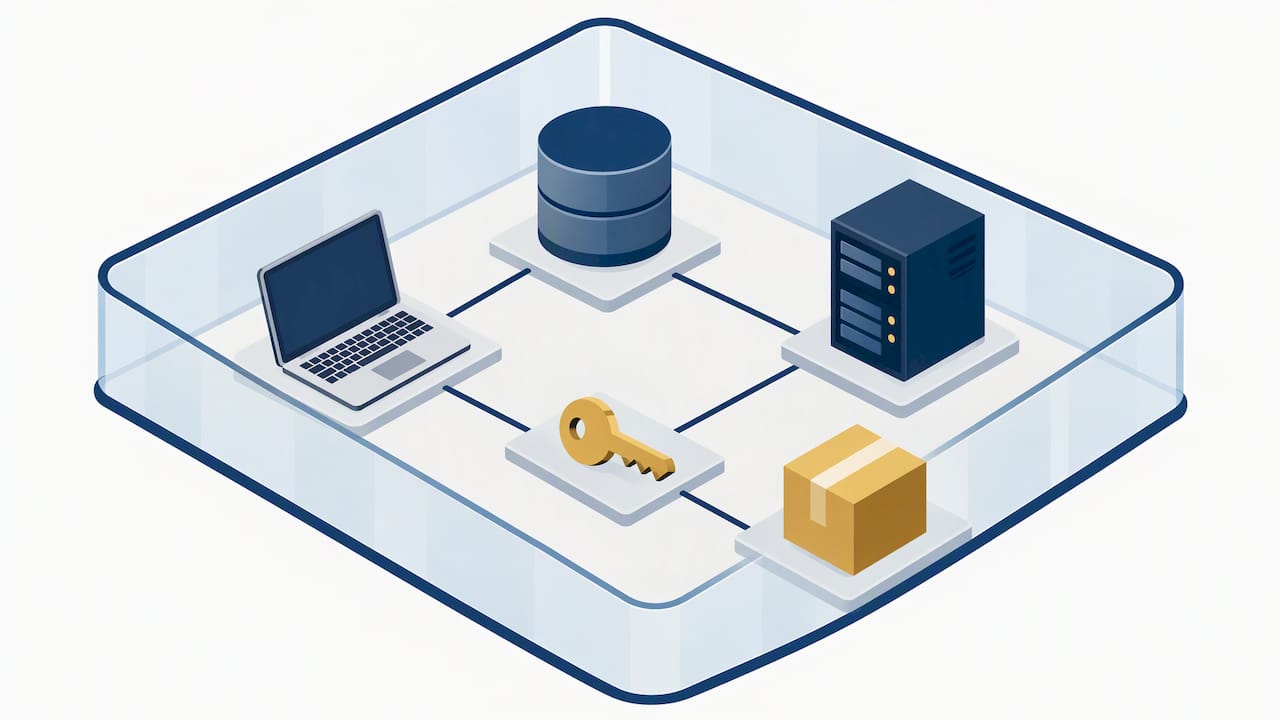
CISA’s broader guidance on ICT supply chain risk management adds that the supply chain is globally interconnected and vulnerable at every tier. It recommends identifying suppliers, including upstream ones, verifying third-party assurance and building supply chain risk management protocols that address country, compliance and operational risk.
That brings us to fourth-party risk. A frequently overlooked exposure is the vendor that quietly subcontracts part of the work to someone with weaker security. CISA’s developer-facing guidance, Securing the Software Supply Chain, points to a contractual answer: require disclosure of subcontractors and hold them to the same compliance requirements as the primary vendor. The same guidance describes the unmitigated risks, including injected malicious code, vulnerable third-party components and poor supplier hygiene.
The technical controls to expect from a vendor:
- Hardened development and build environments, with no shared or unmanaged machines.
- VPN with multi-factor authentication for every connection into your systems.
- Jump hosts for access to sensitive environments, with session logging.
- Managed endpoint protection on every device that touches your code.
- Software bills of materials (SBOMs) for each release.
- CI/CD pipelines hardened against tampering, with signed builds where feasible.
- A DevSecOps practice aligned to the NIST Secure Software Development Framework (SSDF).
NIST’s guidance on software security in supply chains reflects Executive Order 14028, which pushes for secure development practices, attestations, SBOMs and stronger vendor risk assessment as part of acquisition. NIST’s work on risk-based DevSecOps makes a point worth remembering: DevOps practices shorten release cycles, but adopted without security controls they can increase risk.
On the contractual side, these are the protections to write in:
| Contract control | What it gives you |
|---|---|
| Attestation to secure development practices | A signed statement you can audit against |
| SBOM delivery with each release | Visibility into third-party components |
| Subcontractor disclosure and flow-down | Same obligations for every party touching your code |
| Audit and inspection rights | The ability to verify claims instead of trusting them |
| Breach reporting SLA | A defined clock for notification |
If you need engineers who already work to these expectations, our staff augmentation model places engineers inside your own security perimeter and tooling, so access and credentials stay under your control.
Legal, compliance and country risk: data flows, export controls and sanctions
Legal exposure in offshore work is easy to underestimate because it does not appear in a sprint review. It appears when a regulator, an auditor or a customer asks where their data went and who touched it.
Cross-border data flow is the first issue. Moving personal or regulated data to a vendor in another jurisdiction can trigger privacy obligations and sector rules, and what applies depends on your industry and the type of data. Financial institutions, for example, face supervisory expectations. The FFIEC’s handbook on foreign-based third-party service providers states that senior management is expected to evaluate foreign-based relationships for country, compliance and operational risk, conduct due diligence, and build oversight and monitoring into contracts. It lists choice of law, export controls, OFAC sanctions and contingency and exit strategies among the elements to consider. Whether a given rule such as GLBA applies to you is a question for counsel and your compliance team.
Country risk is the second issue. Political instability, sanctions changes or economic disruption in a vendor’s location can interrupt delivery regardless of how good the team is. The point is not to avoid whole regions. It is to know your exposure before it becomes an incident, and to have a plan for continuing the work if the situation changes.
Intellectual property needs the same attention. Who owns the code, where the repositories live, and what happens in a dispute are all decided by the contract and the governing law you choose. A clear choice of law and a defined venue for disputes save weeks of argument later.
The controls that reduce these exposures:
- Data residency and handling clauses that state where data may be stored and processed.
- Export-control and sanctions due diligence on the vendor and on any subcontractors.
- Clear choice of law and dispute resolution terms, agreed before work begins.
- IP assignment language that transfers ownership of all work product, with source code held in repositories you control.
- A contingency plan that names how work continues if a location becomes unavailable.
- Transition and exit clauses that oblige the vendor to hand over code, documentation and knowledge on termination.
None of this is an argument against offshore delivery. It is an argument for deciding these questions on paper while both parties are still friendly. If you are unsure which engagement model carries less legal exposure, our guide to staff augmentation versus outsourcing compares how control and responsibility differ between them.
Risks that start before the contract
Several offshore failures are set up before anyone signs. Each of the five below needs a control, an owner and a signal that tells you whether the control is working.
1. Hiring before the work is clear
An experienced engineer still struggles when nobody has agreed on priorities, acceptance criteria or who makes product decisions, and added capacity makes the confusion more expensive. Define the systems the person will own, the first meaningful assignment and who answers product and technical questions. Watch for work redone after implementation, tasks blocked on decisions and stakeholders giving conflicting instructions.
2. Treating a résumé as evidence
Keywords and years of experience do not show how someone reasons about your system, and a confident interview can hide technical gaps. Ask candidates to explain their own contribution to a relevant project, use a qualified technical reviewer and run a short, bounded exercise where it answers a real question. Watch for vague personal contribution or an inability to explain tradeoffs.
3. Leaving the working model implicit
Teams lose days when nobody has agreed core hours, response times or where decisions are written down. Odesa engineers work US business hours in every region, so the overlap question is settled at kickoff. Still agree on an escalation route and short written updates covering what was done, what is next and what is blocked.
4. Depending on access you do not control
Delivery becomes fragile when one person alone understands a system, credentials are shared informally or repositories sit in someone else’s account. Keep repositories, deployment accounts and documentation under your organization, grant access by role and agree on handoff and offboarding before the start date.
5. Comparing only the hourly rate
A low rate can be outweighed by rework, unclear scope or heavy management time, and a high quote is not proof of better delivery. Model expected hours, extra charges, onboarding and review time, minimum commitments and notice terms, and confirm what a trial or replacement clause covers. Odesa staff augmentation starts at $45/hr, month to month, with a two-week trial.
Vendor due diligence and the contract controls worth insisting on
Most offshore failures can be traced to a decision made before the contract was signed. A disciplined selection process is the cheapest risk control available, so we recommend running it in a fixed order.
- Verify the vendor’s supply chain risk management program. Ask how they identify their own suppliers and subcontractors, and what assurance they obtain from them. NIST’s guidance on cybersecurity supply chain risk management recommends integrating this into existing risk management and developing policies, plans and assessments, and a vendor should be ready to explain its approach.
- Request evidence of security posture. Ask for policies, recent assessments and the results of any third-party testing, not a questionnaire answered in a single afternoon.
- Check retention and staffing metrics. Ask about engineer turnover, tenure on client projects and how replacements are onboarded. Turnover is the quiet driver of lost knowledge.
- Examine financial stability. A vendor that cannot meet payroll cannot protect your project.
- Speak to references. Pick clients with a similar scope and ask what went wrong, not only what went well.
- Require subcontractor disclosure and flow-down. Every party touching your code is named and bound by the same obligations.
- Set SLA metrics you can measure. Response times, defect rates and delivery against acceptance criteria, reported on a schedule.
- Secure audit and inspection rights. You need the contractual ability to verify what you were told.
- Settle IP and source code protections. Ownership of work product, and escrow or equivalent access to the code.
- Write termination and transition support into the agreement. Define what the vendor must hand over, and in what timeframe.
Before access is granted, confirm operational readiness at onboarding: access controls scoped to the minimum needed, multi-factor authentication enforced, a defined lifecycle for credentials, and a termination procedure that removes access on the day someone leaves the project.
Pro Tip: Ask to see the vendor’s offboarding checklist during due diligence. How they remove access from a departing engineer tells you more about their security culture than any policy document.
The same logic applies if you are hiring individuals instead of a firm. Our practical guide to hiring remote developers covers screening and onboarding in more detail. And if you are still deciding between a vendor-led model and direct hiring, our comparison of staff augmentation and recruitment lays out the tradeoffs.
Governance routines that keep an offshore team on track
Good vendors still drift without governance. The fix is a small set of recurring routines that keep expectations visible, so problems are caught while they are cheap.
Start with a cadence that matches the risk categories above:
- A weekly operations review covering delivery against acceptance criteria, blockers and upcoming dependencies.
- A monthly security review covering access, vulnerabilities, SBOM changes and any incidents.
- A quarterly supply chain risk review covering subcontractors, ownership changes and exposure in the vendor’s location.
Pair that cadence with clear decision rights. A simple RACI chart, stating who is responsible, accountable, consulted and informed for each class of decision, removes the ambiguity that turns small disagreements into stalled work.
Onboarding deserves a defined pattern, because the early stages set the tone:
- Shadowing and pairing: New engineers work alongside someone who knows the system before taking on independent work.
- 30/60/90 milestones: Concrete expectations at each stage, such as environment set up and first merged change by day thirty, an owned feature by day sixty and full independence on a defined area by day ninety.
- Knowledge-transfer rites: Recorded walkthroughs and written decision logs, so context does not live only in people’s heads.
Communication norms keep the distance manageable. Agree on overlap hours, rules for meetings (agenda in advance, written notes after), documentation standards and asynchronous playbooks for situations that should not wait for the next overlap window. For a deeper treatment of staying close to the work without hovering, see our founder’s guide to managing offshore developers without micromanaging.
Retention is a risk control in its own right, since turnover is what erodes everything else. The tactics that help:
- Mentoring that connects vendor engineers with senior people on your side.
- Clear career paths, so engineers see a future in the engagement.
- Recognition for good work, delivered in public and in writing.
- Transparent feedback loops with vendor leadership, including honest early warnings when you see a problem developing.
- Stable team composition, with changes planned and handed over, not sudden.
An engineer who feels like part of your team reports problems early. One who feels like an anonymous resource keeps quiet, and that silence is where most delivery risk hides.
Technical controls and artifacts to require in every RFP
If you ask vendors for the same technical baseline every time, their answers become comparable and gaps become obvious. We suggest writing the following into every RFP and verifying it after signature.
Artifacts to require:
- A software bill of materials for each release.
- The CI/CD pipeline definition, so you can see how code becomes a build.
- Test coverage figures and automated test reports.
- Vulnerability scan outputs, with remediation logs showing how and when findings were closed.
- Build provenance and logs that show where an artifact came from.
Verification methods to agree upfront:
- Periodic code reviews by your own engineers or a neutral party.
- Static and dynamic security testing (SAST and DAST) running in the pipeline.
- Third-party penetration tests at an agreed frequency.
- Supply chain audits and attestations aligned to the SSDF.
CISA’s recommended practices guide for developers organizes its mitigations around the software lifecycle and includes artifacts and checklists, which makes it a useful template for what to request.
Worth remembering: Applied without security controls, DevOps and DevSecOps practices can increase risk, so ask whether speed and security are managed together or traded off against each other.
A minimal baseline you can adopt immediately looks like this:
- VPN with multi-factor authentication for all access.
- A jump host in front of sensitive environments, with logging.
- Endpoint protection on every device that handles your code.
- An SBOM delivered with each release.
- Regular vulnerability scanning, with findings tracked to closure.
This baseline is deliberately modest. A vendor that cannot meet it is telling you something important, and a vendor that exceeds it should be willing to show you how.
A step-by-step checklist from selection to ongoing governance
Use this as a working plan. It runs in the order you will actually need it.
Before signing the contract
- Record each risk in a risk register with an owner and a mitigation, so nothing stays implicit.
- Collect the mandatory artifacts and the vendor’s attestation to secure development practices.
- Agree escrow and transition arrangements, so you can leave without losing the work.
Immediately after signature
- Issue the onboarding plan and an access matrix that lists who may reach which systems.
- Set the 30, 60 and 90 day milestones, with named reviewers.
- Define acceptance criteria for the earliest deliverables, so the first demo tests the relationship as well as the code.
Throughout the engagement
- Run weekly operations reviews, monthly security reviews and quarterly supply chain audits.
- Define exit triggers in advance, such as repeated SLA misses or an undisclosed subcontractor, so ending the engagement is a decision you made earlier.
| Phase | Key action | Evidence you hold |
|---|---|---|
| Pre-contract | Risk register, artifacts, escrow | Signed attestation and plan |
| Onboarding | Access matrix, 30/60/90 plan | Approved milestones |
| Steady state | Weekly, monthly, quarterly reviews | Review notes and metrics |
| Exit | Triggers and transition clauses | Handover package |
If you want a partner that handles matching and onboarding personally, read about how we run IT staff augmentation, including when it works and how to plan it.
The overlooked risk: undisclosed subcontracting, and the minimum we would accept
Most teams focus on the vendor they signed and never ask who the vendor signs. Fourth-party subcontracting is the risk we see underestimated most often, and the reason is simple: it is invisible unless the contract makes it visible. A vendor can subcontract part of your project to a party with weaker security, and nothing in the delivery reports will tell you. The fix is plain. Require disclosure of every subcontractor, bind each one to the same obligations as the primary vendor, and keep the right to refuse any you have not approved.
Our minimum assurance threshold before work begins is four things together: an SBOM for each release, a vendor attestation to SSDF practices, audit rights, and source code escrow. If any one is missing, we would treat the engagement as unready, however good the pitch. If you want help evaluating vendors or staffing a team that meets this bar, our work at Odesa.co is built around exactly that.
Odesa places engineers from Latin America, the EU and Eastern Europe who work full US business hours under a US contract, which reduces the time-zone and contract risks covered above. See how to hire offshore developers through Odesa.
FAQ
What are the downsides of offshore outsourcing?
The main downsides are communication friction from time zones and language, quality gaps when QA and integration are thin, security exposure when vendor environments are not treated as part of your own, legal and compliance obligations around cross-border data, and knowledge loss from turnover. Each can be reduced with due diligence, contract controls and active governance.
What is offshore development?
Offshore development is the practice of contracting software work to a team in a distant country, often several time zones away. It differs from nearshore work, where teams sit in closer time zones, and from onshore work in your own country. The tradeoff is usually cost and talent access against coordination effort.
Is nearshore safer than far offshore?
Research suggests nearshore projects tend to have lower project-management effort and fewer communication problems than far-offshore ones. Safer depends on your needs, though: security, legal and quality risks still need their own controls regardless of distance.
Should I treat a vendor’s build environment as part of my own security perimeter?
Yes. CISA and NIST guidance says vendor development environments should be treated as part of the corporate environment, so access, monitoring and build controls should meet the same standard you apply internally.
Sources
- Cisa
- Software Security in Supply Chains: Software Cybersecurity for Producers and Users | NIST
- On the Risks and Safeguards for Requirements Engineering in Global Software Development: Systematic Literature Review and Quantitative Assessment
Recommended
- Nearshore vs Offshore Software Development: A US Guide
- How to Manage Offshore Teams: A Practical Guide for US Companies
- Dedicated Development Team: When It Fits and What It Costs
Reviewed by Val Narodetsky, founder of Odesa.co.