
Choose fixed-price when scope is well defined and you need budget certainty. Choose time-and-materials when scope is uncertain and you need flexibility to adapt as work unfolds. The trade-off is simple: fixed-price trades flexibility for predictability, while T&M trades predictability for adaptability. Jump to the decision checklist if you need to act now.
TL;DR:
- Fixed-price contracts are best for well-defined projects with stable requirements and a clear scope that won’t change significantly during execution.
- Time-and-materials agreements suit uncertain scopes, early prototypes, or ongoing support, but require active management and strict operational controls to prevent cost overruns.
- A hybrid approach combining fixed-price for settled modules and T&M for exploratory work is often optimal for complex projects.
- Negotiating a T&M contract should include a locked rate card, a ceiling price, and audit rights to mitigate higher risk exposure.
- Regular oversight, such as verifying timesheets and tracking burn rate, is essential to keep T&M projects within budget and prevent uncontrolled expenditures.
Table of Contents
- 1. What a time-and-materials contract is and how it works
- 2. What a fixed-price contract is and how it works
- 3. The trade-offs that actually matter between the two models
- 4. Decision checklist: how to choose fixed, hybrid, or T&M
- 5. Negotiation essentials and clauses worth fighting for
- 6. Operational controls that keep T&M projects on budget
- 7. How we apply these contract choices in real engagements
- Editorial perspective: the posture we recommend for engineering projects
- How we can help with staff augmentation or scoped development
- FAQ
- Sources
1. What a time-and-materials contract is and how it works
A time-and-materials (T&M) contract pays the contractor for actual labor hours and materials used, plus a markup, rather than a single agreed sum. According to Cornell Law School’s Wex), T&M reimburses the cost of labor and materials plus markup and fits situations where the extent or duration of work cannot be accurately estimated at the time of award. A related variant, the labor-hour contract, bills only for labor at fixed hourly rates while materials are supplied separately or excluded.
Hourly rates typically come from a pre-negotiated rate card by role or seniority. Material costs get reimbursed at actual cost or with a capped markup, and most agreements include a ceiling price that caps total liability even though the final deliverable scope may shift.
Invoicing runs on a regular cycle, usually weekly or biweekly, backed by timesheets, task descriptions and receipts for materials.
Common T&M situations include:
- Projects where requirements are still being discovered or will change during build.
- Maintenance, support or ongoing feature work with no fixed end state.
- Early-stage prototypes where the client needs engineering capacity before scope is locked.
2. What a fixed-price contract is and how it works
A fixed-price contract sets a single agreed sum for a defined scope of work, shifting performance risk to the contractor. FAR 16.103 directs buyers to select contract type by negotiation and sound judgment, favoring firm-fixed-price when cost risk is minimal and requirements are stable, and reserving other types for cases where firm pricing is not yet feasible.
Firm-fixed-price is the most common variant: one price, one scope, no adjustment unless the scope itself changes. Fixed-price-incentive and fixed-price with target cost variants add a shared-savings or shared-overrun formula on top of a target price, giving the contractor some upside for finishing under budget.
Deliverables, acceptance criteria and assumptions all need explicit documentation up front, because anything left ambiguous becomes a dispute later. When uncertainty is high, contractors price that risk into the bid, which is why a fixed-price quote on a poorly scoped project often comes in noticeably higher than the same work priced under T&M. A defensible software project estimation narrows that premium.
Fixed-price tends to fit:
- Well-specified builds with a clear technical blueprint and stable requirements.
- Projects with a hard budget ceiling set by funding or governance constraints.
- Work where the buyer has limited capacity to monitor hours or manage a contractor relationship closely.
3. The trade-offs that actually matter between the two models
The theoretical difference between T&M and fixed-price is well known. What matters in practice is how each model behaves under pressure.
- Price certainty. Fixed-price locks the number before work starts; T&M leaves the final cost open until the ceiling or the work itself is reached.
- Flexibility for scope changes. T&M absorbs new requirements without a formal change order, while fixed-price requires a renegotiation (and usually a price increase) for anything outside the original scope.
- Risk allocation. Fixed-price shifts cost-overrun risk to the contractor; T&M leaves that risk with the buyer, which is exactly why GAO has flagged T&M as the higher-risk arrangement for buyers who do not actively manage it.
- Administrative overhead. T&M demands ongoing timesheet review, invoice checks and rate audits; fixed-price demands heavier upfront scoping and milestone verification instead.
- Incentives for efficiency. Fixed-price rewards the contractor for finishing faster; T&M, left unmanaged, can reward slower work since hours drive revenue.
Change orders illustrate the split clearly. On a fixed-price build, a client who wants to add a feature mid-project triggers a formal change order, a new price negotiation and often a schedule slip. On a T&M engagement, the same request just becomes additional hours on the next invoice, with no renegotiation needed, but also no automatic ceiling on where that spending stops.
Consider two short scenarios: a company with a fully specified mobile app rebuild benefits from fixed-price because acceptance criteria are already locked. A company exploring a new AI feature with unclear technical requirements is better served by T&M, since locking a price on unknown work usually means paying a large risk premium for certainty nobody can guarantee anyway.
4. Decision checklist: how to choose fixed, hybrid, or T&M
Run through these questions before signing anything:
- Is the scope fully specified, with acceptance criteria both sides agree on?
- How novel is the work: has a similar project been delivered before, or is this the first of its kind? If an existing product already covers it, revisit the build vs buy decision first.
- What is the funding cadence: a locked annual budget, or a rolling allocation that can flex?
- How much do you trust the vendor’s rate transparency and reporting discipline?
- Can your team dedicate someone to review hours, invoices and progress weekly?
As a heuristic: well-defined scope plus low novelty points to fixed-price. Uncertain scope plus high novelty points to T&M. Mixed conditions (some modules are clear, others are not) point to a hybrid. FAR guidance on contract type selection explicitly supports splitting a program into firm-fixed-price line items for well-defined modules and T&M for investigative or prototype work, which reduces overall cost exposure while keeping room for discovery. For typical price ranges by project size, see our guide to custom software development cost.
When T&M is unavoidable, require minimum documentation before work starts: a documented ceiling price, a written rate card, and a brief justification for why fixed-price was not feasible. GAO’s review of commercial-service T&M contracts found that agencies frequently skipped these written determinations, which left spending largely unmonitored.
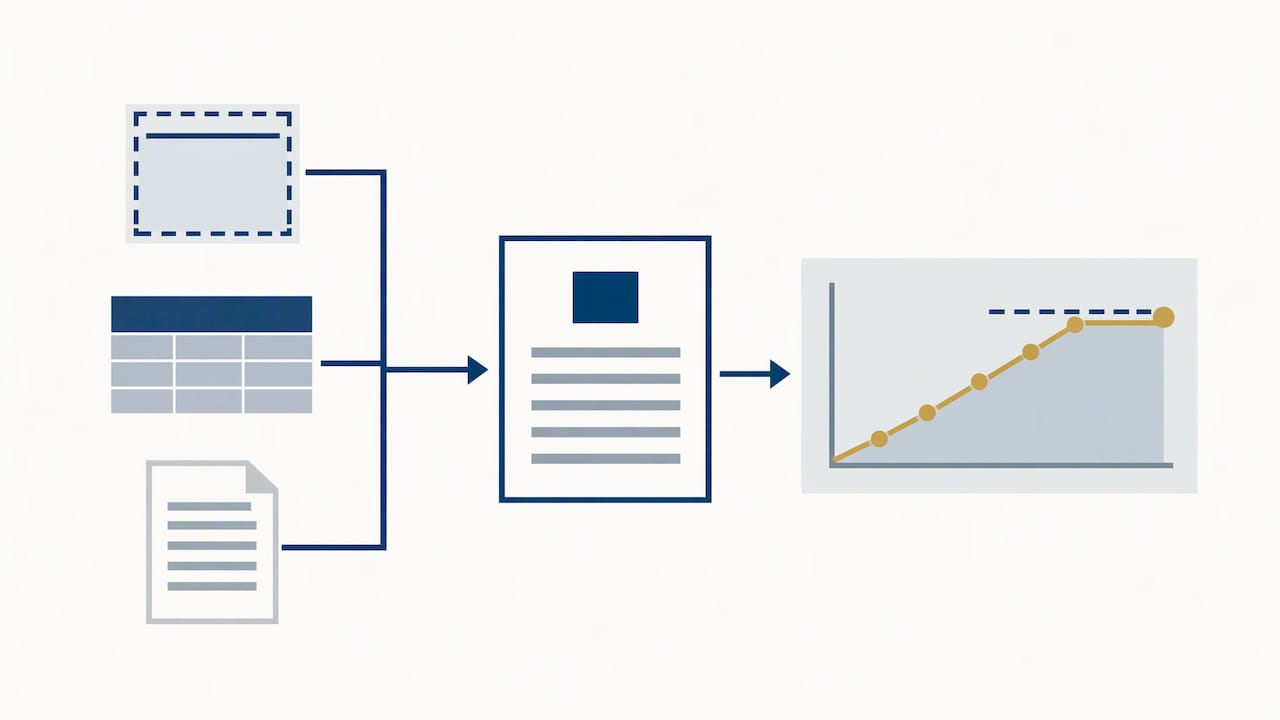
Pro Tip: If you cannot fully define scope but still need a budget ceiling, negotiate a T&M contract with a not-to-exceed cap rather than defaulting straight to fixed-price.
5. Negotiation essentials and clauses worth fighting for
Strong contract language prevents most of the disputes that show up later. For T&M agreements, negotiate:
- A rate card listing hourly rates by role, locked for the contract term.
- A ceiling price or not-to-exceed cap, with a defined process for raising it.
- Timekeeping and approval rules: who signs off on hours before invoicing.
- Audit rights, letting you review timesheets and material receipts on request.
- Acceptance criteria for milestones, even within an otherwise open-ended engagement.
For fixed-price agreements, prioritize:
- Milestone-based acceptance tied to specific, testable deliverables.
- A defined change-order pricing method agreed before work starts, not negotiated mid-dispute.
- A warranty period covering rework on defects found after delivery.
- Performance incentives for early or under-budget delivery, where appropriate.
Both contract types need shared clauses covering IP ownership, termination rights, an escalation path for disputes, and a fixed reporting cadence. Projectmanagement notes that a sound change-control process matters more than the contract label itself, a point worth remembering before assuming either model solves scope problems on its own.
6. Operational controls that keep T&M projects on budget
T&M only stays low-risk when someone actively manages it. Build these controls in from day one:
- Verify timesheets against task descriptions weekly, not at invoice time.
- Hold milestone reviews even without formal deliverable gates, to confirm hours are translating into progress.
- Run a rolling forecast against the ceiling price so overruns are visible before they happen.
- Schedule periodic spot audits of invoices and material receipts.
Track burn rate against planned hours, the ratio of scope completed to hours billed, and change-order frequency as your core KPIs. Set a clear approval authority for who can authorize additional hours, and review rates and scope on a fixed cadence rather than letting either drift. Once the scope has stabilized and the team has a track record on the engagement, that is the signal to convert remaining work to fixed-price. GAO’s federal contracting review makes the same point: agencies should periodically assess whether work has matured enough to shift from T&M to firm-fixed-price, rather than leaving it open-ended by default. For engagements involving external contractors, PROJECT-JTH’s practical tools for contract and production management offer another resource for tightening this kind of operational discipline.
7. How we apply these contract choices in real engagements
Our staff augmentation service maps directly to T&M: clients pay from $45 per hour for senior engineers who integrate into an existing team, with hours billed as work progresses rather than against a fixed deliverable. Our custom development service fits the fixed-price model instead, suited to scoped projects with defined deliverables, available through our custom development offering.
We handle matching personally: our founder works directly with each client to understand the specific skill set and team fit needed before any engineer is proposed, which keeps augmented T&M engagements from drifting into mismatched hires. Readers comparing the cost of each path can run their own numbers through our Developer Hiring Cost Calculator.
Editorial perspective: the posture we recommend for engineering projects
Our stance: treat the fixed-price versus T&M choice as a spectrum, not a binary, and default to hybrid or phased contracts whenever part of the scope is settled and part is not. Project managers should sit in on contract negotiations directly, since procurement-only agreements often miss the execution details that later turn into disputes.
How we can help with staff augmentation or scoped development
If your project scope is still taking shape, our staff augmentation service gives you senior engineers on flexible, hourly terms, with personal matching from our founder and long-term retention built into how we structure engagements.

If the scope is already locked and you want a fixed-price outcome, our custom development option is built for exactly that. For teams weighing a permanent hire against ongoing augmented capacity, our breakdown of staff augmentation versus recruitment walks through the trade-offs. Reach out through our homepage to talk through which structure fits your project.
FAQ
Which is better, fixed price or T&M?
Neither is universally better: fixed-price suits well-defined scope where budget certainty matters most, while time-and-materials suits projects where requirements are still evolving. The right choice depends on how clearly the work is specified and how much flexibility you need to manage change.
What is time and material pricing?
Time-and-materials pricing bills the client for actual labor hours worked and materials used, plus a markup, rather than one fixed sum for the whole project. Most T&M agreements include an hourly rate card and a ceiling price that caps total spending.
Is T&M the same as cost-plus?
They are closely related but not identical: both reimburse actual costs plus a markup, but T&M specifically bills labor at pre-set hourly rates rather than at raw cost plus a separate fee structure. Cornell Law School’s Wex describes T&M as paying the contractor’s cost of labor and materials plus markup.
When would you use a time and materials contract?
Use T&M when the extent or duration of the work cannot be accurately estimated at the start, such as early-stage prototypes, evolving feature work or ongoing maintenance. GAO’s federal contracting reviews note that T&M carries higher cost risk, so it works best with active oversight and a defined ceiling price.
Sources
Recommended
- Developer Hiring & Engineering Service Pricing
- The Cost of Hiring a US Developer: A Complete Budget
- Developer Hiring Cost Calculator
Reviewed by Val Narodetsky, founder of Odesa.co.